
What is veterinary practice management software?
A plain explanation of what practice management software does in a veterinary clinic, what it replaces, and how to tell whether your practice needs one system or is coping fine with several.
3 min readVetWorkFlo
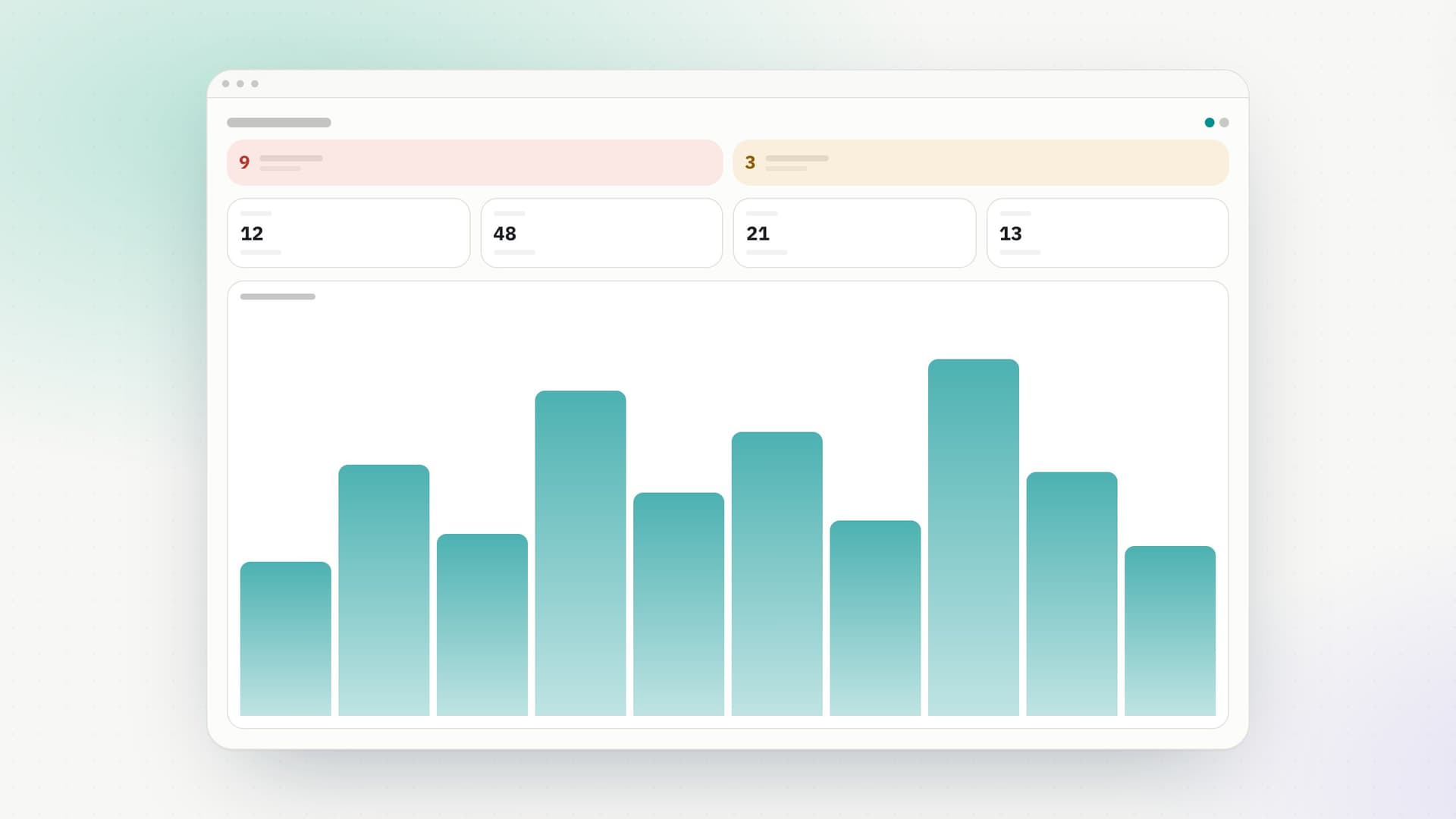
Veterinary practice management software is one system that holds the things a clinic runs on: the appointment diary, the people who work there, the clients and their animals, the clinical record, and the day-to-day administration around all of it.
That definition is dull, and deliberately so. The interesting question is not what the category is called — it is what it replaces.
What it replaces
Most practices arrive at this software from the same place. Not from nothing, but from four or five things that each work:
- A diary, on paper or in a shared calendar
- A client list, in a spreadsheet or in somebody's head
- Clinical notes, in a folder or in a second system
- A rota on the staff-room wall
- A website somebody built three years ago and nobody can edit
Every one of those is fine on its own. The cost is in the gaps between them. A client rings to move an appointment; the diary changes and the reminder does not. A vet goes on leave; the rota changes and the bookable slots do not. A pet's vaccination lapses; the record knows and nobody is told.
Practice management software is worth having when the cost of those gaps is larger than the cost of changing how you work.
What it should cover
A system worth the name handles at least these, and handles them as one thing rather than as modules that export to each other:
Appointments. Requests coming in, a diary with real statuses, and a record of what happened — not just what was booked. See appointment scheduling.
Clients and patients. One page per animal: species, breed, allergies and conditions, vaccinations, clinical records, prescriptions and reminders. See patient records.
People. Everyone who works there, each with a role that decides what they can see. A receptionist needs the diary and the client list; they do not need the clinical record. See staff management.
Availability. The hours each person actually works, feeding the slots clients can book. See availability and scheduling.
The client's side. Somewhere for pet owners to ask for an appointment, see what was agreed, and be reminded before it.
What it is not
It is not an imaging or laboratory system, and software that claims to be everything usually is not very good at any of it. It is not an accounting package, though it should know what was charged. And it is not a replacement for judgement: it records decisions, it does not make them.
How to tell if you need one
You probably do not, if your practice is one vet, one room, and twenty clients a week who all have your mobile number. The overhead of any system is real.
You probably do, if any of these are true:
- Somebody's job includes copying information from one place to another
- A missed appointment is discovered rather than prevented
- You cannot answer "how many consultations did we do last month" without counting
- A new member of staff needs a week to learn where things are kept
- Losing one person would mean losing what only they know
The last one is the real test. Software that does nothing else useful still earns its place by making the practice independent of any single memory.
Where to start
Start with the part that hurts. For most practices that is the diary, because it is the part clients touch and the part the whole day is built around. Get bookings, availability and reminders working as one thing, and the rest — records, roles, reporting — tends to follow without a project.
If you want to see what that looks like in practice, ask for a demo and we will walk through the console with your kind of practice in mind.