
How to reduce missed veterinary appointments
Missed appointments cost more than the empty slot. Here is what actually reduces them: reminders people read, changes clients can make themselves, and a diary that records what happened.
2 min readVetWorkFlo
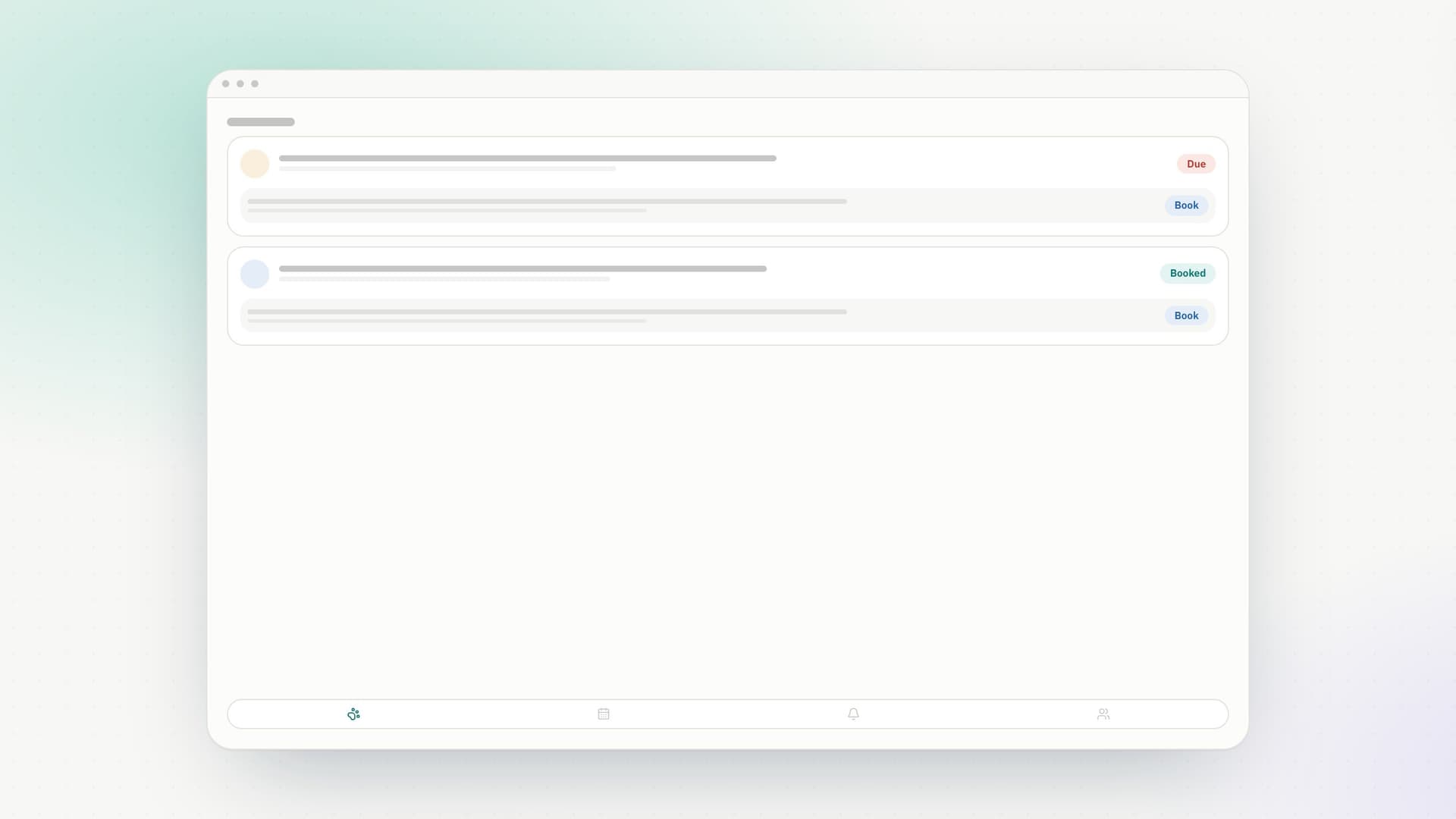
A missed appointment costs more than the empty slot. It costs the slot somebody else wanted, the time spent chasing, and — if the visit mattered — a patient who did not get seen.
Most practices treat no-shows as a client problem. Usually they are a process problem, and the process is fixable.
Why appointments get missed
Very few are forgotten on purpose. The common causes are dull:
- No reminder went out, or it went out so early it was forgotten
- The time was never confirmed in writing, so there was nothing to check
- Changing it meant phoning during the hours the client is also at work
- The appointment was made weeks ago and life moved on
Notice that three of those four are things the practice controls.
What actually helps
Send a reminder on a schedule you choose. Not "at some point". A reminder a day or two before is the single change most practices make first, because it addresses the largest cause. VetWorkFlo sends appointment reminders on a schedule the practice sets.
Confirm in writing, every time. A client who can look at their phone and see Thursday at 10:00 with Dr Hayes does not have to remember it. Clients are emailed when something is confirmed or changed.
Make changing it easy. A client who cannot reach you will not cancel — they will simply not arrive. If they can ask for a different time from their own app, the slot comes back to you instead of being wasted.
Give the appointment a reason. "Rufus, boosters" is harder to skip than "appointment".
Record what actually happened
This is the part practices skip, and it is the part that tells you whether anything is working.
A slot that is only ever "booked" tells you nothing afterwards. A diary that records confirmed, completed, cancelled, did not attend, offered and declined gives you a real number — and a real number is what turns "we get a lot of no-shows" into "we had eleven last month, nine of them on Fridays".
Once you can see that, the fix is usually obvious and specific: a particular day, a particular appointment type, a particular gap between booking and visit.
What not to do
Do not start with a charge. A no-show fee is a blunt instrument, it damages relationships with the clients you most want to keep, and it treats the symptom. Try reminders and easy rescheduling first; most practices find the problem shrinks enough that the policy never has to be written.
Do not over-remind. Three messages for one appointment trains people to ignore all of them.
In short
Reminders people read, changes they can make themselves, and a record of what happened. None of it is clever, and all of it compounds.
Appointment scheduling in VetWorkFlo covers each of these, or book a demo and we will go through your own diary with you.