
Digital or paper veterinary records: an honest comparison
Paper is not stupid, and digital is not automatically better. What each is actually good at, where digital genuinely wins, and the migration question nobody asks until it is too late.
3 min readVetWorkFlo
Plenty has been written about moving veterinary records from paper to software, almost all of it by people selling the software. So let us start with the part those articles skip.
What paper is genuinely good at
Paper never goes down. It needs no password, no training and no supplier. It works in a power cut, it works when the internet does not, and nobody has ever lost a filing cabinet to an expired subscription.
A single-vet practice with a well-kept filing system and a good memory is not doing anything wrong. If that is you, the honest answer is that you should change when the pain of paper exceeds the pain of changing — not before.
Where digital genuinely wins
Being in two places. A paper record is wherever it was left. A digital one is in the consulting room, at the front desk and on the phone of the vet who is on call.
Finding things. "Which of our patients are overdue a booster?" is a question paper cannot answer without somebody reading every file. Digital answers it in a second, and then lets you act on it.
Not forgetting. A record that knows a vaccination has lapsed, a repeat prescription is waiting, or a registration is about to expire can say so. Paper waits to be asked.
Legibility and continuity. Every practice has a file somebody cannot read, and every practice has had the conversation that starts "who wrote this?".
Surviving people leaving. This is the big one. Paper plus memory works until the person with the memory is on holiday.
Where digital is oversold
It does not make you faster at writing notes — a keyboard is not quicker than a pen for most people, and the gain is in what happens to the note afterwards, not in writing it.
It does not remove admin, it moves it. The work of keeping a record current is the same work; the difference is that the system can then use it.
And it does not survive bad process. A digital record filled in inconsistently is a paper record with a backup.
The question nobody asks early enough
What happens to the records you already have?
The honest answer for most practices is: they do not all come across. Typing years of history into a new system is a project nobody finishes. What usually works is a line in the sand — new records go in the new system from day one, and old files stay accessible as files, consulted when they are needed and gradually becoming irrelevant.
That is not a tidy answer, but it is what actually happens, and planning for it beats discovering it in month two.
If you do move
- Pick a date and move everything new from that date. A half-and-half period is the worst of both.
- Agree what goes in a record before anybody starts, so two vets do not develop two conventions.
- Keep the paper. You are not required to destroy it, and it costs nothing to keep for a while.
- Start with the information you use constantly — species, breed, allergies and conditions, vaccinations — rather than everything.
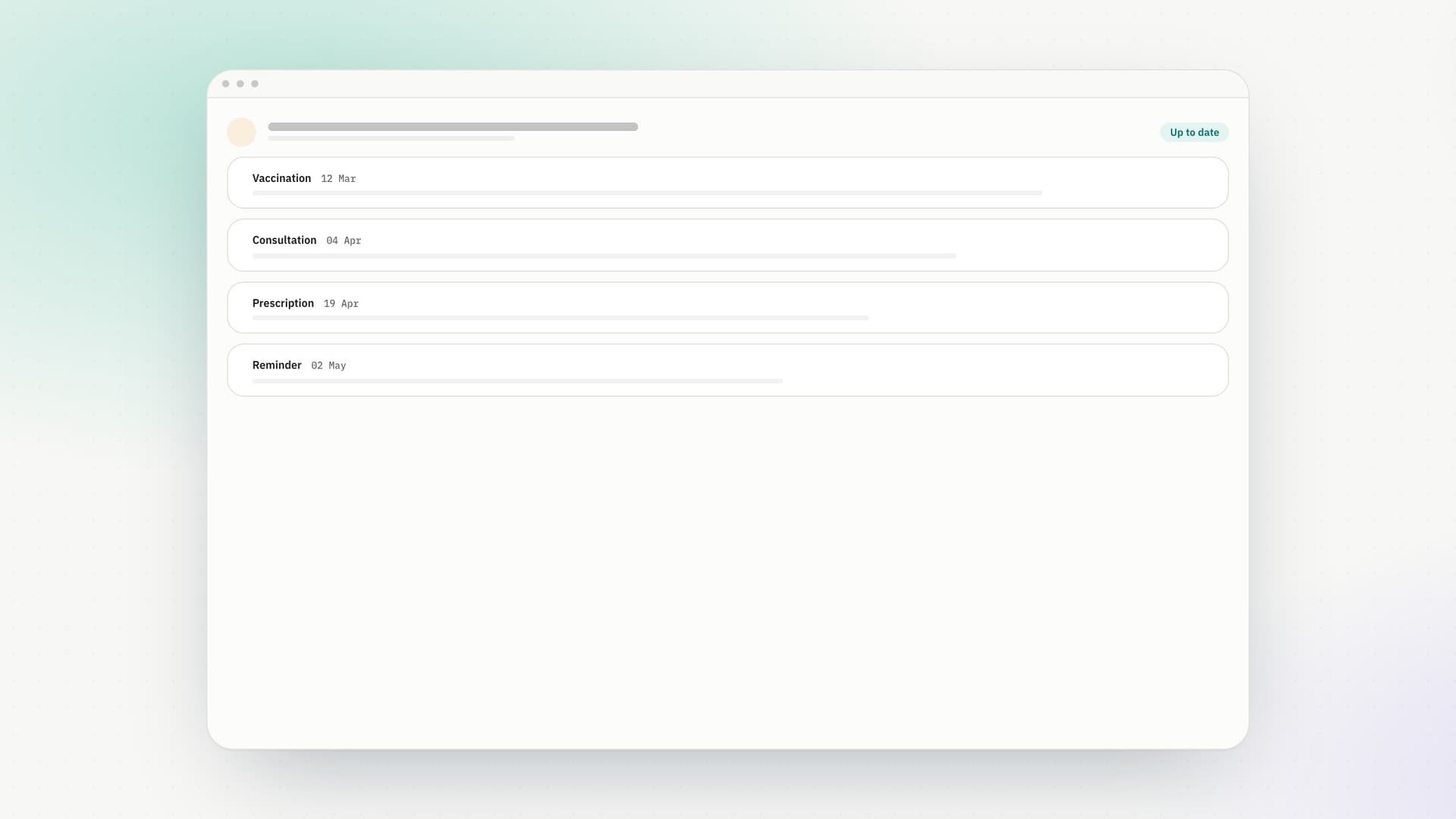
In VetWorkFlo, each pet has one page carrying exactly that, along with clinical records, prescriptions and reminders. See patient records, or ask for a demo and bring your hardest case.