
Veterinary staff scheduling: making the rota and the diary agree
Why rotas drift away from the appointment diary, what that costs, and how to build a weekly pattern that clinic hours, leave and closures all feed into automatically.
2 min readVetWorkFlo
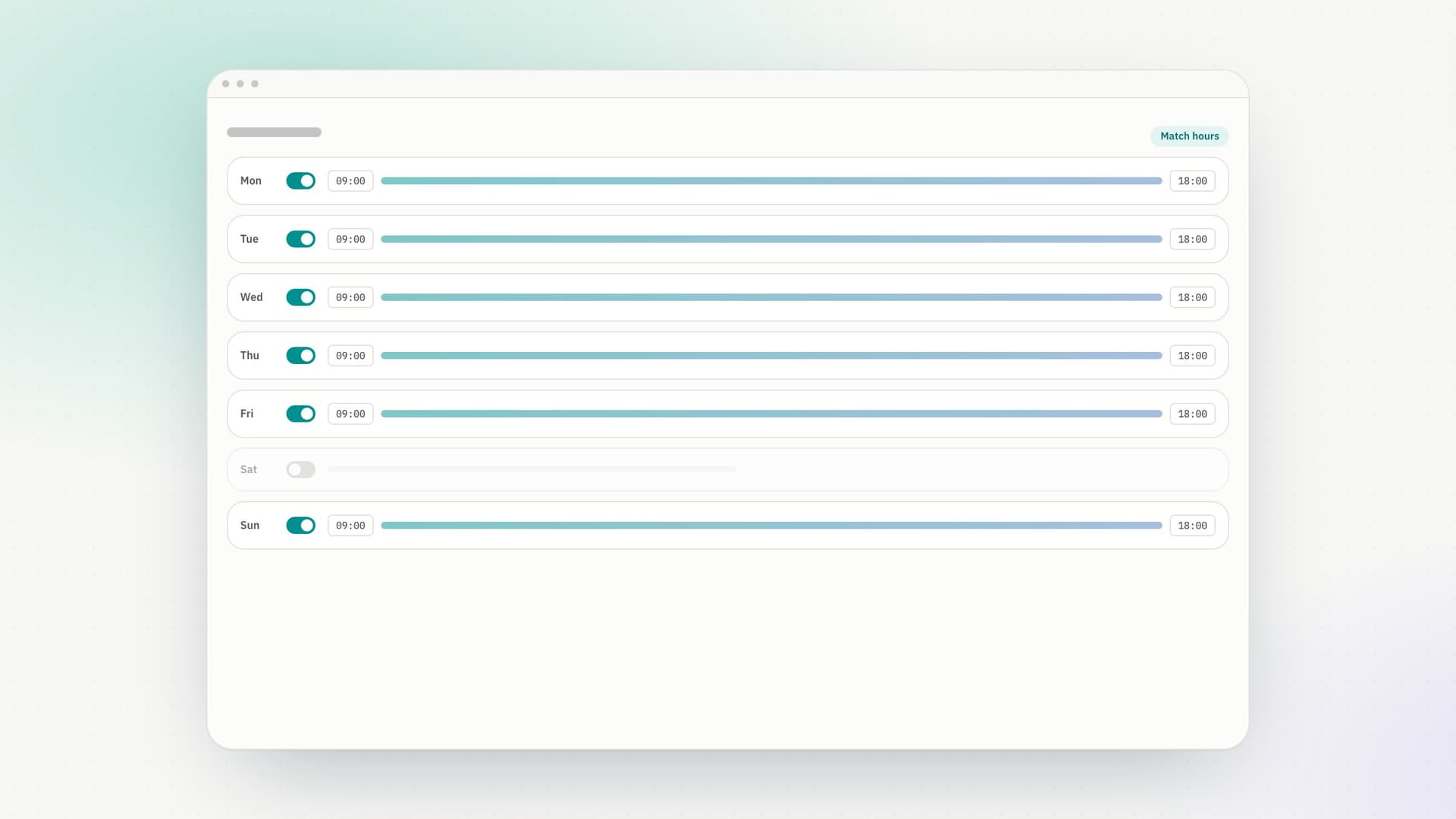
Ask a practice how it builds the rota and you will usually hear about a spreadsheet, a group chat and one person who holds it together. Ask how the rota connects to the appointment diary and the answer is often: it does not, somebody checks.
That checking is the problem. It works until the week somebody is busy.
What drift actually costs
When the rota and the diary are separate lists, three things happen on their own:
- A client is booked in on a day their vet is on leave
- A slot nobody can staff sits in the diary looking available
- Somebody works a day they did not agree to, because the diary said so
None of these is a disaster on its own. All of them erode trust — in the diary, and in whoever maintains it.
One pattern, not two lists
The fix is structural rather than clever: the rota should be the thing that decides which slots exist.
In practice that means a weekly pattern per person — the hours they work each day, with their break — rather than a rota rebuilt from scratch each week. Most veterinary teams are far more regular than their rota-building suggests. Build the pattern once, and handle the exceptions as exceptions.
What should remove a slot automatically
Four things, with no human in between:
The person's own pattern. The hours they actually work.
The practice's opening hours. A pattern that falls outside them should raise a warning when it is set, not surprise somebody later.
Approved leave. Requested and approved in the system, including half days, and taken out of the diary the moment it is approved.
Closures. A day the practice is shut is shut to everybody — no client can request through it and the desk cannot book into it.
VetWorkFlo applies all four. See availability and scheduling.
Cover, before somebody notices
The question worth being able to answer quickly is not "who is in on Thursday" but "which day next week has nobody on it". A week view that shows how many people are on each open day turns that into something you see rather than something a client discovers.
Locums, part-timers and the awkward cases
Every practice has them, and they are where rigid systems break. Two things make them manageable:
- A record and an account per person, including people who are there for a fortnight — with a role that matches how long they will be there
- Patterns that can differ per person, rather than a single practice template everybody is forced into
See staff management for how roles and access work alongside this.
A small discipline that pays
Put leave in the system when it is agreed, not when it approaches. Most rota disasters are not scheduling failures — they are a holiday that lived in somebody's head for six weeks.
If you want to see your own week in it, ask for a demo.