
Five numbers worth watching in a veterinary practice
Not a dashboard full of charts. Five figures a practice can act on — what each tells you, what changes it, and why most practice reporting measures the wrong things.
2 min readVetWorkFlo
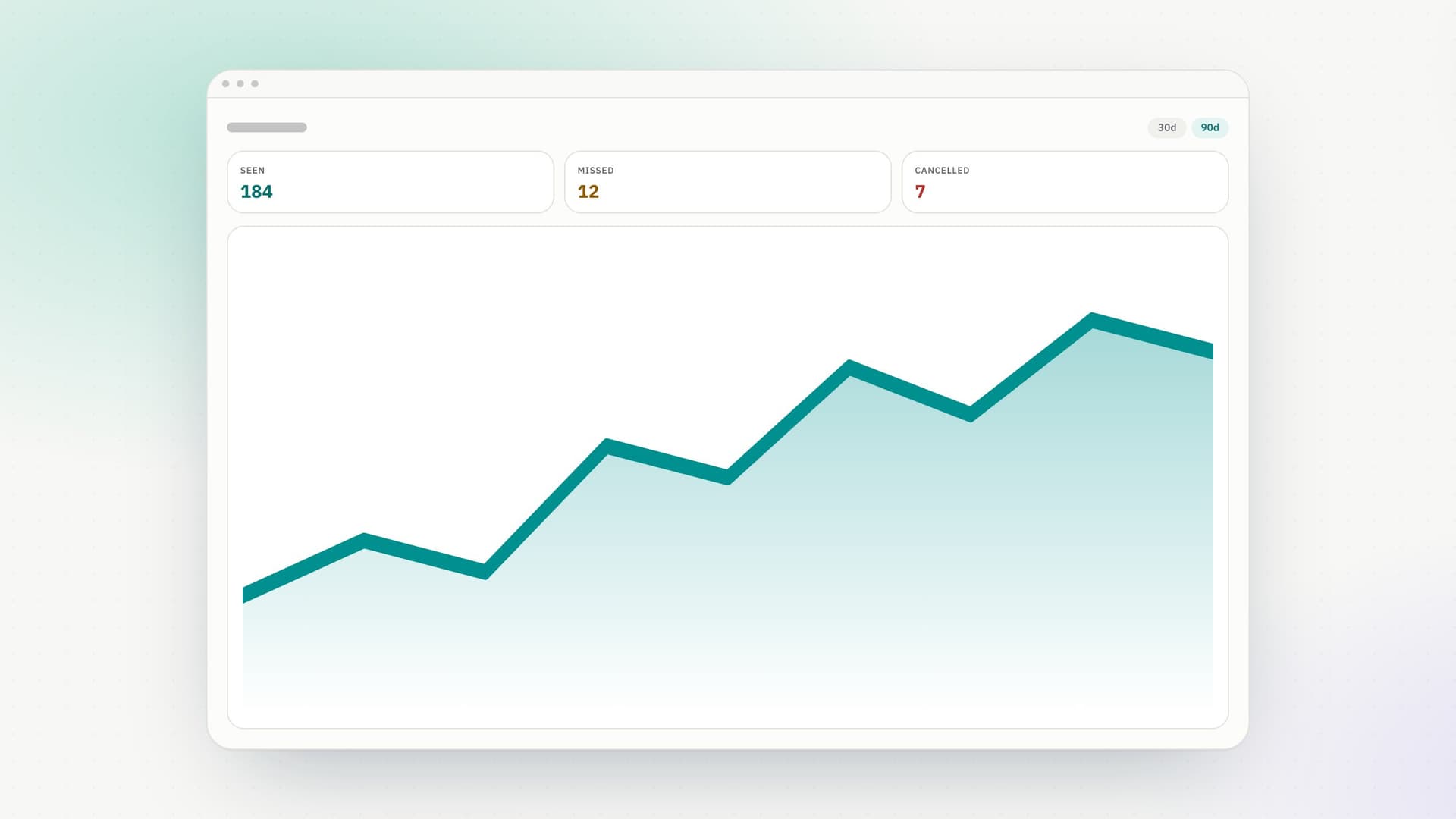
Most practice reporting fails in one of two ways. Either there is nothing, or there is a dashboard with forty figures on it that nobody has looked at since the week it was set up.
The useful version is small. Here are five numbers that change decisions, and what each is for.
1. Did-not-attend rate
What it tells you: how much of your capacity evaporates, and whether the measures you have taken are working.
What changes it: reminders, easy rescheduling, and how far ahead people book. Track it by day of the week and by appointment type — the problem is almost never spread evenly. More on reducing missed appointments.
The catch: you can only measure it if your diary records did not attend as distinct from cancelled. A diary where everything is "booked" cannot tell you this at all.
2. Slots offered versus slots filled
What it tells you: whether you have a demand problem or a capacity problem. These look identical from the front desk and need opposite responses.
What changes it: availability patterns, consultation lengths, and how much same-day capacity you hold back.
3. Days to the next available appointment
What it tells you: what a new client experiences when they ring. It is the number most practices feel and least often measure.
What changes it: cover on the thin days, rather than overall staffing. A practice with a three-week wait usually has one or two days a week doing the damage.
4. Active clients
Not registered clients — clients seen in the last twelve months.
What it tells you: the real size of the practice. Registration counts only ever go up, which makes them useless for decisions.
What changes it: retention, which is mostly communication and continuity, and almost never price.
5. Vaccinations and checks overdue
What it tells you: care that has quietly lapsed, and work that is already yours if somebody picks up the phone.
What changes it: acting on the list. This is the one number on here that is also a to-do list, which is why it is worth watching weekly rather than monthly.
What to ignore
Appointments booked, as a standalone figure. It goes up when you have more capacity and down when you are full. On its own it tells you almost nothing.
Anything you cannot act on. If a number changes and you would not do anything differently, stop measuring it.
Keep it to a page
The point of a small set is that you can hold it in your head and notice when something moves. VetWorkFlo's dashboard and reports are built around what the practice already records — the diary, the team, the client and patient list — rather than asking anyone to maintain figures separately. See the platform.
If you want to look at your own five, ask for a demo.